Concrete Slab & Foundation Work
Solid foundation work that supports your structure safely and stands the test of time.
Why Foundation Work Matters
Everything starts with the foundation. Whether you are building a new home, adding a garage, or constructing a pole barn, the foundation determines how well the structure performs for decades. Cut corners here and you face expensive repairs later. Do it right from the start and you never worry about settling, cracking, or structural issues. That is why AnvilPoint focuses on precision foundation work that meets or exceeds building codes.
Foundation slabs need proper site preparation, correct concrete mix, adequate reinforcement, and professional finishing. We handle residential projects like house foundations, garage slabs, and shed pads. We also work on commercial foundations for retail buildings, warehouses, and industrial facilities. The process differs based on load requirements and local codes, but the principle stays the same: build it right the first time so it lasts forever.
Critical Elements of Quality Foundation Work
- •Thorough soil testing and evaluation to identify potential settling issues
- •Proper excavation depth and compacted gravel base for stability
- •Moisture barriers and vapor retarders to prevent water infiltration
- •Steel reinforcement placed to code specifications for strength
- •Professional finishing and curing to achieve full concrete strength
Types of Foundation Slabs We Install
Not all slabs serve the same purpose. Different structures need different foundation approaches. We work with engineers and builders to determine the right solution for each project. Here in Summit County, soil conditions vary significantly. Some areas have clay that expands and contracts with moisture. Other locations have sandy soil that drains well but needs proper compaction. We adjust our methods based on what your site needs.
Residential Foundation Slabs
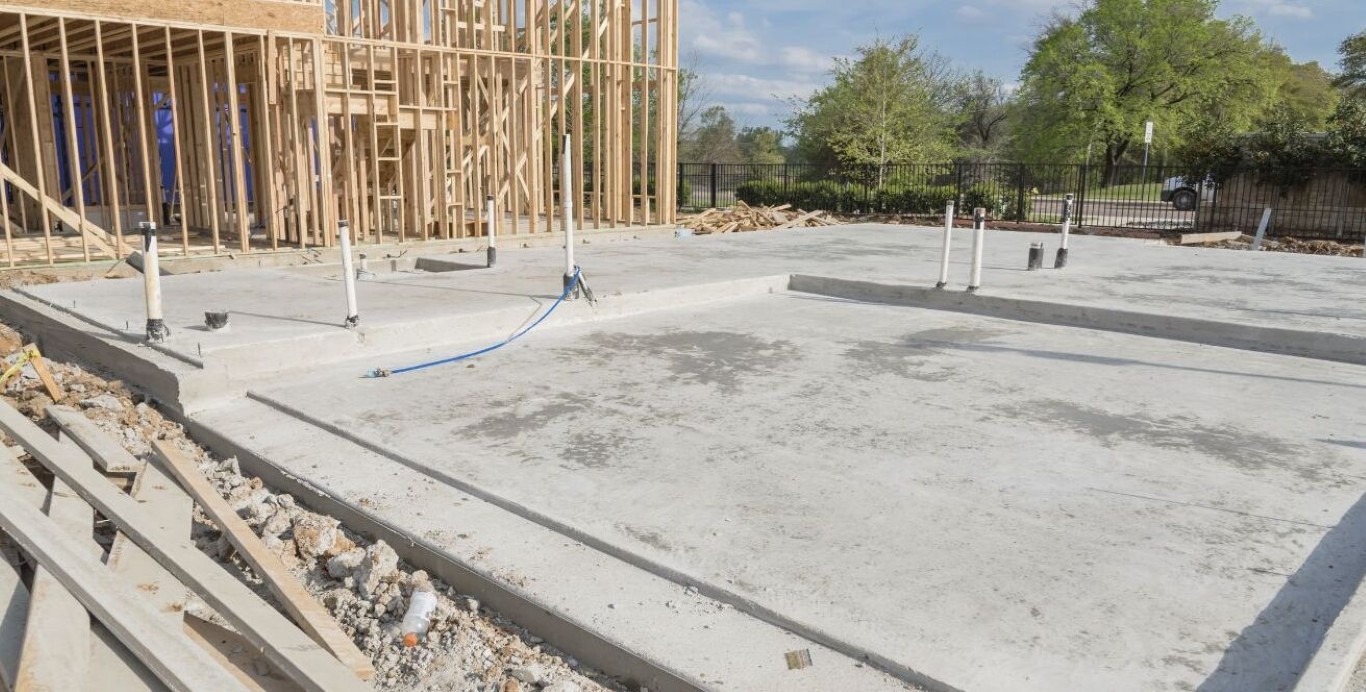
House foundations require careful planning and execution. Monolithic slabs pour the foundation and floor in one piece, which works well for simple rectangular homes on flat lots. Stem wall foundations use concrete footings below frost line with a raised slab on top, providing better drainage and easier plumbing access. We coordinate with your builder to ensure plumbing stub-outs, electrical conduits, and anchor bolts go in the right places. Garage slabs need proper thickness to support vehicle weight, typically 4 to 6 inches with reinforcement.
Commercial and Industrial Slabs
Commercial projects demand thicker slabs and heavier reinforcement. Retail buildings need smooth, level floors for displays and shopping carts. Warehouses require slabs that handle forklift traffic and heavy storage loads. Industrial facilities often need special finishes or chemical-resistant coatings. We pour slabs up to 12 inches thick with wire mesh and rebar reinforcement positioned precisely to engineering specs. Joint spacing, control cuts, and floor flatness all matter for commercial applications.
Specialty Slab Applications
Some projects need specialized slabs beyond standard foundations. Equipment pads support heavy machinery like generators or HVAC units. These small slabs need extra thickness and reinforcement for concentrated loads. Shed and outbuilding slabs provide a stable, level base for storage structures. Pool equipment pads create proper mounting surfaces near swimming pools. We also pour slabs for outdoor workshops, RV storage, and agricultural buildings. Whatever your project needs, we engineer the slab to handle the specific loads and conditions it will face.
Our Foundation Installation Process
Foundation work follows a strict sequence. Skip steps or rush the process and problems appear later. We take time to do each phase correctly because we know foundation mistakes are expensive to fix. The process typically takes 5 to 10 days depending on project size and weather conditions. Here is what happens from start to finish.
Site Preparation and Excavation
We start by locating underground utilities and marking property boundaries. Then we excavate to the depth specified in building plans, usually 12 to 18 inches below finished grade. The excavation must extend beyond the foundation edges to provide working room. We check grade and elevation constantly to ensure everything matches plans. Poor excavation leads to uneven floors and drainage problems, so we invest time getting this step right.
Base Preparation and Reinforcement
We install a compacted gravel base, typically 4 to 6 inches thick. This provides drainage and a stable foundation layer. We compact in lifts using professional equipment to achieve proper density. Then we lay vapor barrier plastic to prevent ground moisture from migrating through the slab. Steel reinforcement goes on top of chairs that hold it at the correct height in the concrete. We position rebar or wire mesh according to engineering specifications and secure everything so it stays in place during the pour.
Pouring and Finishing
On pour day, we place concrete from trucks positioned around the site. Our crew spreads and screeds the concrete to precise elevations using laser-guided equipment for commercial jobs. We work the concrete to eliminate air pockets while avoiding overworking that weakens the surface. Finishing creates the texture and flatness specified in plans. Control joints are cut or formed to control where cracks appear. Finally, we cure the slab properly, usually by keeping it damp for at least seven days. This allows concrete to reach full strength and durability.