Concrete Repair & Replacement
Fixing damaged concrete before small problems become expensive disasters.
When to Repair vs. When to Replace
Not every crack means you need to tear out your entire driveway or patio. Sometimes simple repairs fix the problem for a fraction of replacement cost. Other times, trying to patch old concrete just wastes money. The key is knowing which situation you face. Professional concrete repair requires assessing the root cause of damage before recommending solutions. We help homeowners in Cuyahoga Falls make smart decisions based on the actual condition of their concrete, not just the first sign of damage.
Minor surface cracks, small chips, and isolated damage usually respond well to targeted repairs. Extensive cracking, significant settling, or structural damage often means replacement makes more sense long-term. AnvilPoint evaluates your concrete honestly and recommends the most cost-effective solution. We make money either way, so we have no reason to oversell. Our reputation depends on giving you advice that serves your best interests.
Signs Your Concrete Needs Attention
- •Cracks wider than a quarter inch that continue growing over time
- •Uneven surfaces that create trip hazards or water pooling issues
- •Spalling or flaking where the surface layer peels away from base
- •Crumbling edges along driveways, walkways, or patio perimeters
- •Staining or discoloration that indicates water intrusion or chemical damage
Common Concrete Repair Methods
We use different repair techniques depending on what caused the damage and how extensive it has become. Surface repairs fix cosmetic issues without major reconstruction. Structural repairs address underlying problems that threaten integrity. The goal is always to restore function and appearance while extending the life of your concrete as long as practical.
Crack Filling and Sealing
Small cracks let water penetrate, which leads to bigger problems during freeze-thaw cycles. We clean out cracks thoroughly, removing loose material and debris. Then we fill them with flexible sealants or repair mortars designed to move with the concrete. This stops water intrusion and prevents cracks from expanding. For hairline cracks, we often use epoxy injections that bond the concrete back together. These repairs work well when the underlying base remains stable and solid.
Surface Resurfacing
When the surface has deteriorated but the base stays sound, resurfacing restores appearance and function. We apply a thin layer of polymer-modified concrete over the existing surface. This covers spalling, stains, and minor damage while adding a fresh finish. Resurfacing costs much less than full replacement. It works great for driveways, garage floors, and patios where the structure remains solid but looks worn. You can even add decorative finishes during resurfacing to update the appearance completely.
Concrete Leveling and Mudjacking
Settling causes uneven surfaces that create trip hazards and drainage problems. Rather than tearing out and replacing sunken concrete, we often lift it back to the original level. Traditional mudjacking pumps a slurry mixture under the slab to raise it. Newer polyurethane foam injection uses expanding foam that weighs less and cures faster. Both methods work well when the concrete itself remains in good condition. Leveling costs a fraction of replacement and gets completed in a few hours instead of several days.
Partial Replacement
Sometimes only part of your concrete needs replacement. We cut out damaged sections and pour new concrete to match the existing surface. This works when problems stay localized to one area. Maybe tree roots lifted one section of your driveway, or a downspout caused isolated damage. Partial replacement saves money compared to redoing everything while still solving the problem permanently. We match the finish and color as closely as possible so repairs blend naturally.
When Complete Replacement Makes Sense
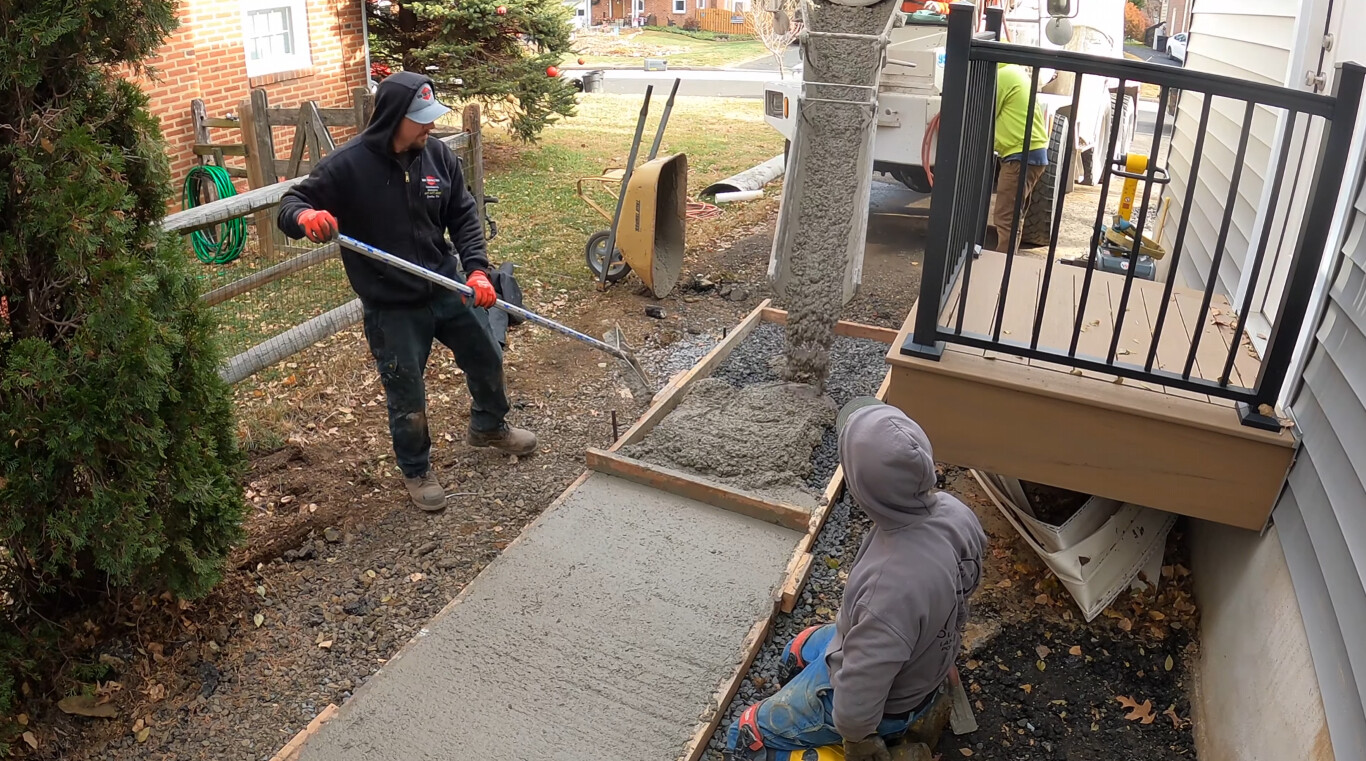
Some concrete has simply reached the end of its useful life. Trying to repair extensively damaged surfaces often costs nearly as much as replacement while delivering inferior results. If your concrete shows multiple major issues, replacement usually provides better long-term value. You get a warranty, proper base preparation, and decades more service life instead of patching problems that will likely continue spreading.
Deciding Factors
Age plays a big role. Concrete older than 25 to 30 years has likely experienced multiple freeze-thaw cycles and may have underlying deterioration not visible on the surface. If damage covers more than 30 percent of the surface, replacement often costs less per square foot than extensive repairs. Structural issues like major settling, heaving, or base failure require starting over with proper preparation. Poor initial installation cannot be fixed with surface repairs.
Long-Term Cost Comparison
Compare repair costs to replacement costs over time. Repairs might save money now but need repeating every few years. Replacement costs more upfront but lasts 30 years or longer without major maintenance. We give you honest cost projections for both approaches. Sometimes repairs buy you a few more years until you are ready for replacement. Other times, replacement delivers better value immediately. We help you make informed decisions based on your budget and timeline, not what generates the biggest invoice for us.